
In an attempt to scroll less and read more, I’m recording everything I read this year. Here’s the fourth instalment.
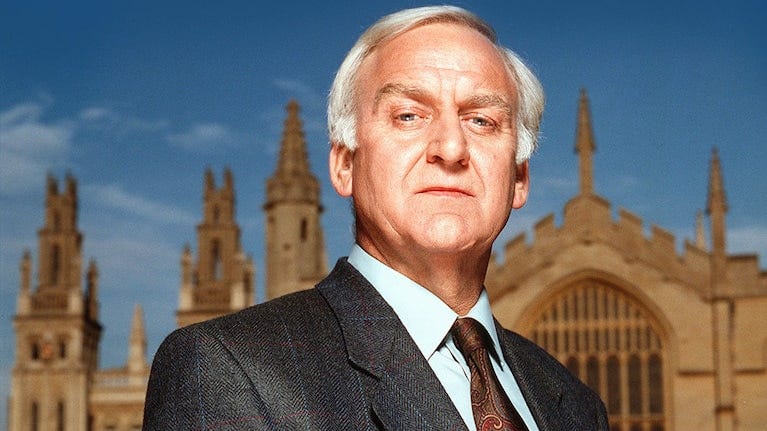
Last Bus To Woodstock, Colin Dexter
Decided to read the first Inspector Morse book as part of my ongoing detective novel binge. It was notably horny and chauvinist, even for 1975, which they must have toned down for the television. (They made a load of other changes, too.) It’s neatly plotted but Morse has this low-level middle-aged tragedy about him, and not much personality besides that.
The New Dark Ages, James Marriott
I read this in proof, and James is still working on it, so I won’t say much except: pre-orders are open!
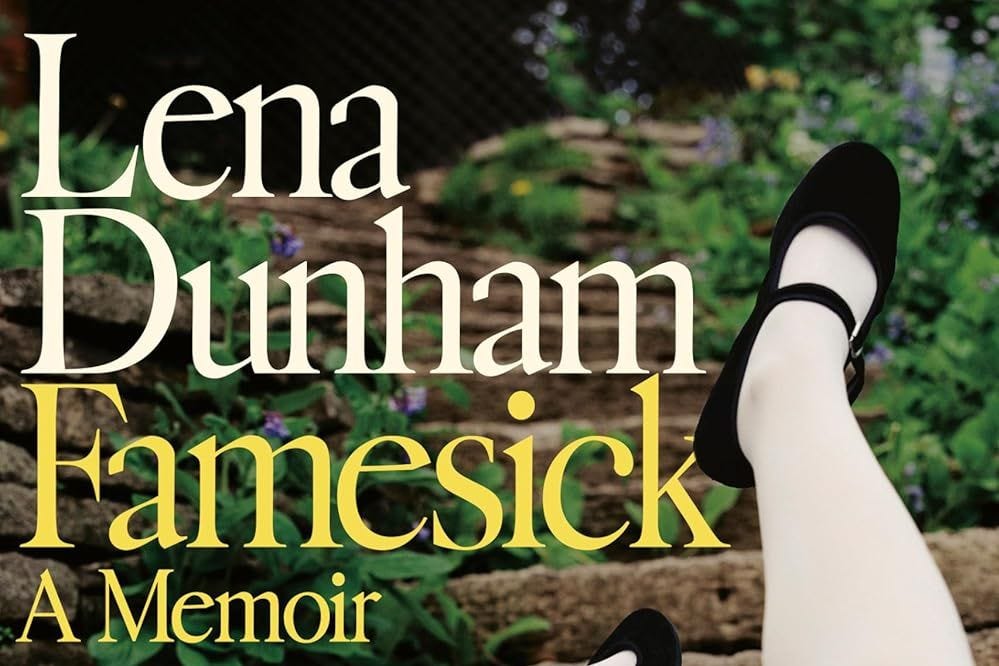
Famesick, Lena Dunham
After the debacle that was Lindy West’s Adult Braces—memorably described by Leigh Stein as “a cult memoir that ends with a spirited defense of the cult leader”—I wasn’t expecting that much from Dunham’s second memoir. (Also because I read her first memoir.) But it was largely great! Sophie Gilbert is right that the dishy showbiz first half is more compelling than the second half covering Dunham’s rehab, but the book succeeds at evoking the claustrophobic nature of 2010s internet discourse and the horrible burden of being famous, and therefore dealing with other people’s envy: “The guilt of being the one who got the thing seemed to propel me into a near-eternal state of generosity.” Every description of Adam Driver taking himself very seriously is precious: “It only occurred to me years later, when I saw him starring as a centaur in a perfume commercial, that just like the rest of us, he might want to be wanted.”
Her account of falling in love with Jack Antonoff is very tender, too; there’s a lovely description of them staying up all night talking, early in the relationship, like kids at a sleepover. (“We were like a pair of twins whose parents should have put them in separate bedrooms for the sake of their sleep schedules.”) And I find her family endlessly fascinating: her mother, an artist, is jealous of her; her father is endlessly supportive to the point of being way too involved; her sibling Cyrus (formerly Grace) simultaneously resents Lena sucking up the family oxygen and somehow gets his own memoir out of being related to her. I also raised my eyebrows at the anorexic grandmother who turns “getting her to eat” into a family project.
The Voyage of the Beagle, Charles Darwin
Technically known as Journal and Remarks, this is Darwin’s contemporaneous record of his time on the Beagle, which spent five years surveying South America and elsewhere, while he collected animal and plant specimens. This sold really well in the 1830s, which doesn’t surprise me, because it’s an account of wonderment.

Charles Darwin: Victorian Mythmaker, AN Wilson
It’s quite rare to read a biography where the writer openly dislikes their subject. I picked up AN Wilson’s offering (there are a load of Darwin biogs, as you’d expect) because I expected it to be pithy and contextualising, which it is. But Wilson also clearly loathes Darwin, and spends the text fighting with him. He declares Darwin to be a byline bandit—downplaying his influences, bigging up his own contributions, and condescending to other scientists who had to work for a living (Darwin had a private income, thanks to his rich father). Wilson is also not impressed by Origin, noting that Darwin initially published his theory with many holes and spent years conceding his critics’ points.
Most interestingly, to me, is that Wilson subscribes to the belief that Darwin’s lifelong post-Beagle illness (he vomited a lot and “extreme spasmodic daily & nightly flatulence”, leading him to install a lav behind a curtain in his study) was essentially psychosomatic, a useful way of getting out of unpleasant duties, and a reason for the whole family to pander to him.
Wilson’s take is that Darwin might well have been lactose intolerant, but he also just loved being an invalid. It meant his wife Emma fussed after him, and he got to go off to Malvern and elsewhere to take water cures. Whatever he had didn’t shorten his lifespan; he made it to 73. We stan an IBS Queen1.

The Galapagos: A Natural History, Henry Nicholls
A breezy account of the islands’ history, which can be boiled down to—people kept trying to colonise them, but the lack of fresh water kept killing them off. The tortoises etc basically owe their survival to this fact.
Incidentally, all the David Attenborough Galapagos documentaries are on YouTube, but not the BBC iPlayer, which seems mad.
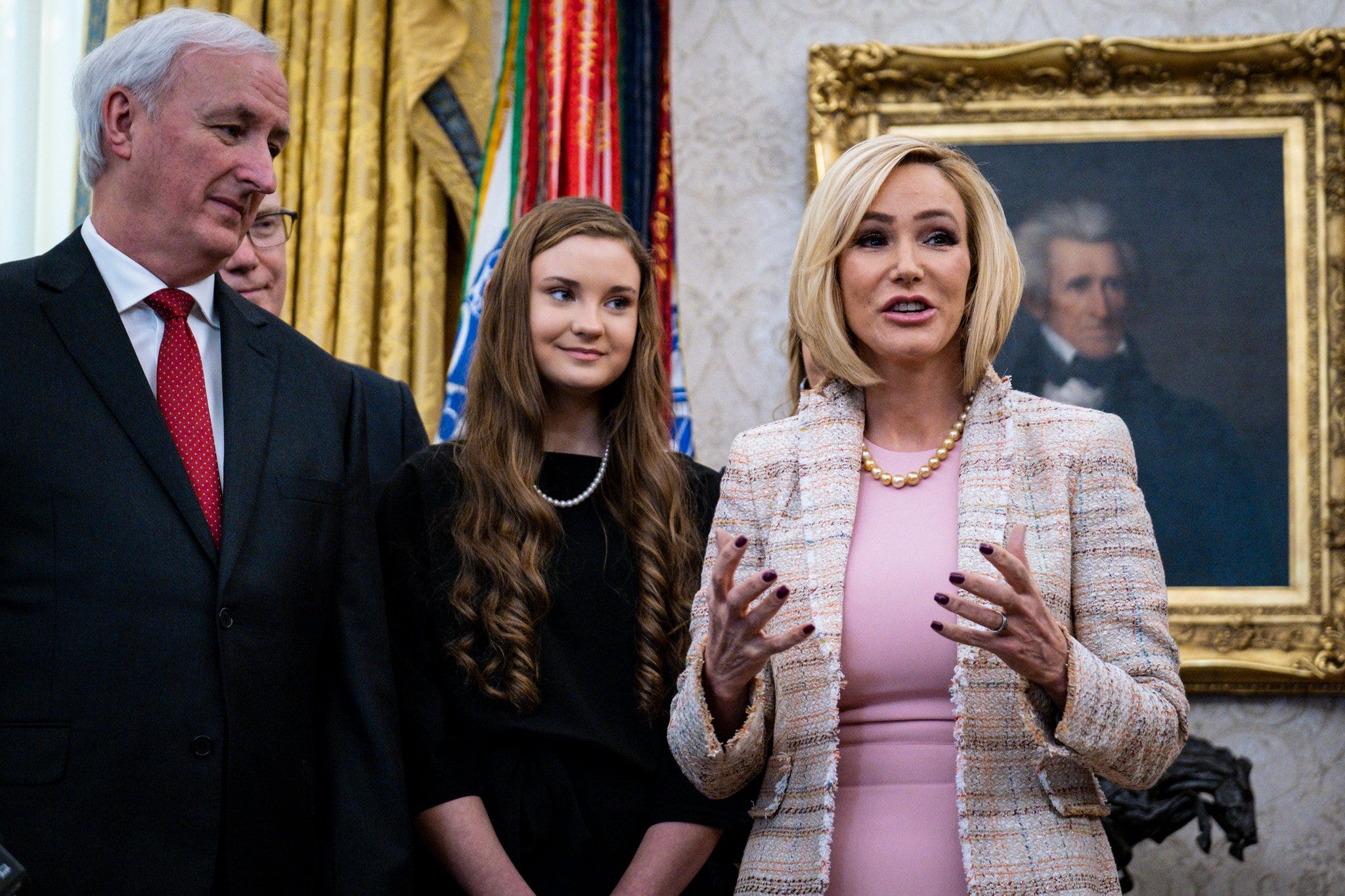
Jesus And John Wayne, Kristin Kobes Du Mez
I read the chapters from this book on white evangelicals in the US which cover the rise of Donald Trump, and it was mind-blowing to revisit the 2015 Republican primary, which was absolutely stuffed with Christian-friendly candidates: Ted Cruz is the son of a travelling evangelist. Even the Catholic Marco Rubio had an evangelical council.
“Candidate Mike Huckabee wasted no time in denouncing same-sex marriage, reproaching “trashy” women who swore, criticizing the Obamas for letting their girls listen to Beyoncé, warning that ISIS was a greater threat than the “sunburn” people might get from climate change, and declaring “war against a ‘secular theocracy.’” Ben Carson, too, was popular among evangelicals. An African American conservative, Carson knew how to play to the white evangelical crowd. He suggested that a Muslim should be disqualified from serving as president, defended the right to fly the Confederate flag, compared political correctness to the practices of Nazi Germany, and suggested that the Holocaust would not have happened if Jews had been armed. Carson appealed to evangelicals who claimed, and often sincerely believed, that they held no racist convictions, without requiring them to sacrifice any of their social and political commitments.
And then all their leaders just went for thrice-married Donald Trump, who wouldn’t know Leviticus if sneaked up on him in the shower! As Kobes du Mez notes, that’s history repeating: “Like Falwell, [evangelical leader Robert Jeffress] reminded evangelicals of 1980, when conservative Christians were presented with two choices: a born-again Baptist Sunday school teacher [Jimmy Carter] and “a twice-married Hollywood actor” who had signed “the most liberal abortion bill in California history” [Ronald Reagan]. Evangelicals chose Reagan because they were looking for a leader.”
My own view is that Trump is basically a televangelist: big hair, prosperity gospel, owns a private jet, survived various sex and tax-related scandals.
That’s all for now. I’ve just started Harry Thompson’s novel This Thing of Darkness, about Captain FitzRoy of The Beagle, which I am enjoying but on which I’ll reserve judgement until I’ve finished…
Someone who didn’t have digestive issues was the Victorian amateur biologist William Buckland: “Long before mental illness set in, Buckland had been gloriously eccentric. He always wore an academic gown when out on field trips collecting palaeontological specimens. His houses were filled with bones and fossils. One of his passions was zoophagy. He ‘used to say that he had eaten his way straight through the whole animal creation, and that the worst thing was a mole, that was utterly horrible’. He had eaten bluebottle flies, panthers, crocodiles and mice. At Nuneham, when presented with the heart of Louis XIV in a silver casket he exclaimed, ‘I have eaten many strange things, but have never eaten the heart of a king before’ – and down Buckland’s gullet it went.”
Poor old Harry Thompson. There’s a haunting bit in his Peter Cook biography on which he says something to the effect of ‘some people achieve everything they are going to when they are young and we should celebrate that’ ps I also recommend you listen to Oh My God Charlie Darwin by The Low Anthem.
I read This Thing Of Darkness on an awful holiday to Tenerife, mainly to avoid going out to another terrible bar to drink cheap flat lager again. It saved me! I finished it on final approach to Dublin airport on the flight home. I hope you love as much as I did Helen!