
Happy full-blown autumn!
And yes, once again I have been juicing the stats with the tail-end of my Miss Marple binge. I notched up six books this month, and not a dud among them.

A Pocketful of Rye, Agatha Christie
There’s a sour nastiness to this late-era Miss Marple (published in 1953) with a poisonous—literally—family in a big house with a yew tree. The maid is found strangled with a clothespeg on her nose, which for me skates dangerously close to the kind of misogynistic corpse-defacement that you do, unfortunately, find in real life, but which is largely excluded from Christie novels. Still, a solid 7 out of 10.
The 4.50 From Paddington, Agatha Christie
Bigger Christie buffs than me will know whether or not this was the direct inspiration for The Girl On The Train—here, a friend of Miss Marple’s glimpses a strangling in a passing train, and yet there is no body reported anywhere nearby. The U.S. title for this was What Mrs. McGillicuddy Saw!, which I think we can all agree is rubbish. Mind you, Christie herself comes up with an ageing and clearly bonkers patriarch called Luther Crackenthorpe, so the book was kinda asking for it. The denouement features a frankly insane bit of stagecraft from Miss M, which almost veered into camp.

Nobody Walks, Mick Herron
Everything you hear about Mick Herron paints him as a relaxed sort—possibly because he doesn’t have a smartphone or even wifi. And yet his portraits of London are relentlessly grim. I felt oddly in tune with this novel, which revolves around the death of a man from a balcony, both because I once lived in a flat that could have been the setting for this novel, and well, I also knew someone who jumped off a rooftop. That made the plot rather more vivid than it might have been. I can’t help thinking of this as a fictional counterpart to Patrick Radden Keefe’s London Falling. Very bleak ending, too.
At Bertram’s Hotel, Agatha Christie
The setting for this one is bananas; it feels more like a Modesty Blaise novel in some ways than a Christie. Definitely a “caper,” as Willie Garvin would say. Ole Marps goes to stay at a London hotel that’s exactly like it was before the war—too exactly, more like a stage set rather than a real business. People there look a bit like the Bishop of Whatever or the dowager countess of Blah. Features a forgetful academic, a young trollope and a kindly old Scotland Yard hand.
The plot was bobbins, really, but a surprising banger nonetheless: 9/10.
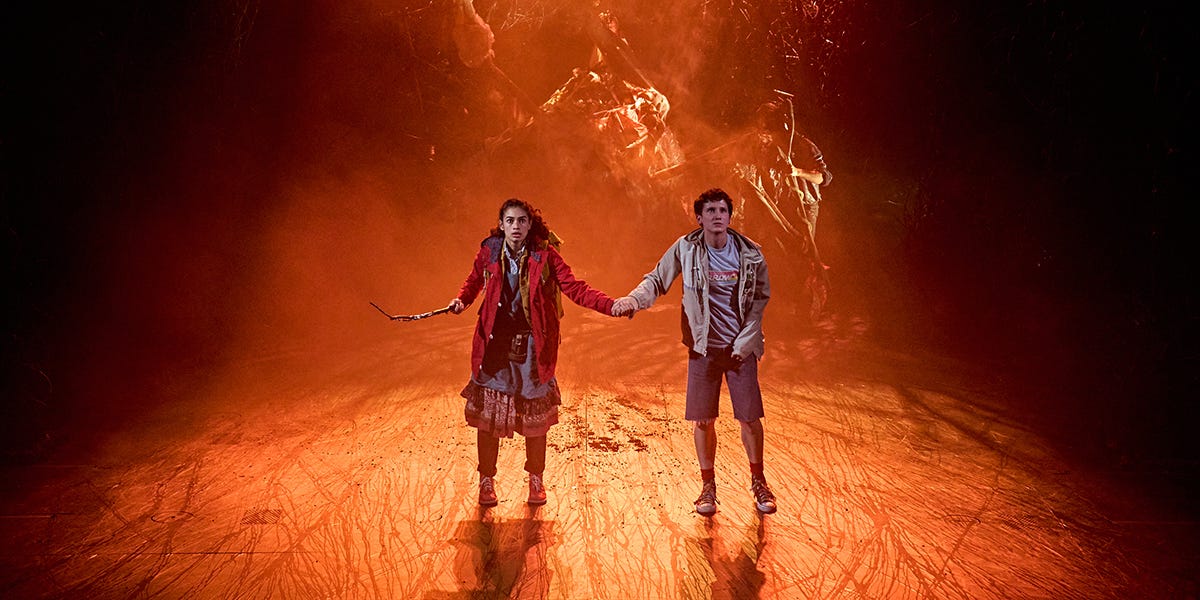
The Ocean at the End of The Lane, Neil Gaiman
What a disturbing book this is—to the extent I can’t quite believe that it was made into a play for children. It’s the story of a young boy in 1950s Sussex whose family is torn apart by the arrival of magic at his house (and then rescued by the next door family of not-quite-witches, and their “ocean,” a large and mystical pond). First the boy’s family’s lodger kills himself, then a rip in the fabric between worlds causes an demonic au pair called Ursula to arrive. She is perhaps a metaphor for Scientology, the cult in which Gaiman grew up. The book is spellbindingly weird, but to me it felt so obviously like a metaphor for child abuse. Extremely unsettling.
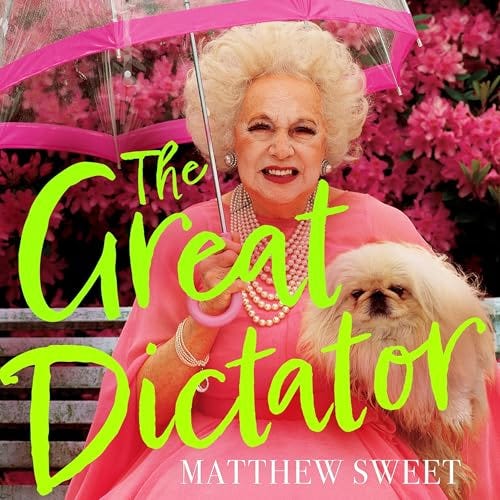
The Great Dictator, Matthew Sweet
I’m only 120 pages into this, but I read most of those in one gulp, on my flight home from New York. I’m pre-emptively annoyed because I expect this will lose the Baillie Gifford prize to London Falling, because that is a self-consciously Serious State-of-the-Nation Book. By contrast, The Great Dictator is styled as a marshmallow—gossipy, funny, full of dreadful aristos doing stupid things.
But this isn’t just a life of Barbara Cartland. It branches out into (so far) a social history of the post-WWI period, where the Great War had robbed Britain of so many young men (a “missing million”) and caused the destruction of the Great House way of life. Both of these affected Cartland, who was born in 1901. “Barbara Cartland came of age in a world depleted of men. This is one of the most important facts of her biography, and one she shared, like a hidden wound, with her contemporaries and legions of her readers,” writes Sweet. He also believes that her romantic heroes were in dialogue with her own father, who shot himself when she was young.
Sweet does something that I first noticed in Craig Brown’s masterly Beatles book, One Two Three Four: he allows the minor characters whose lives intersect with Barbara’s a few paragraphs of their own once she’s done with them. They die in car wrecks or run off with unsuitable men or become Noel Coward. Oddly, I was reading this book when I broke off to skim the introduction to Charles Spencer’s Swan Song, which is fairly brutal about his stepmother Raine (she used to demand breakfast by shouting “where’s my fucking egg” from the top of the stairs). Raine’s mother was, of course . . . Barbara Cartland. I suspect I’m about to find out more about why Raine grew up to be a total diva.
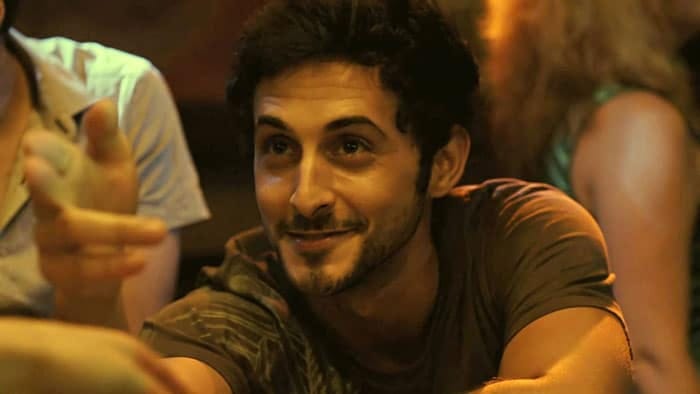
What I’ve Been Watching: Fauda, series one
I’m very late to Fauda, the Israeli television drama that’s become a surprising hit in Arab countries. The show follows an elite Israeli unit of soldiers who go undercover as Arabs; the show is broadcast in Hebrew and Arabic. I watched the entirety of series one within a week while in New York.
Inevitably, I ended up thinking of it as Israeli version of The Wire, where the creators want you to understand both sides as rounded protagonists, and see the similarities between them, even as their differences are deadly. Andrew Sullivan, who has been a fierce critic of Israel’s conduct in Gaza, wrote a tribute to the latest season (which I haven’t seen) and the show’s general excellence. “In that very first season, we see pain, internal conflict, adultery, lies, betrayal, and atrocities on both sides, until it becomes a too-human blur of sweat-stained mutual trauma,” he argued. “The line between good and evil is within every character in Fauda; and it is within both sides. You see Arabs slaughtering innocents; and you see Jews doing it, even those you have come to know and love. Fauda forces you not to look away from either.”
That’s all for this month; I went on a buying spree a few weeks ago and got The Palm House by Gwendoline Riley; The Singer’s Gun by Emily St John Mandel; and A Perfect Hand by Ayelet Waldman. But they will all have to wait, because two nepo-reads come first: Hadley Freeman has just sent me a first draft of her Nora Ephron book (out next year) for which she seems to have spent a blissful year interviewing every celebrity Jew aged 70 and over. (This is one of her great specialisms.) I also have Andrew Hunter Murray’s Everything Happens So Much, which he has sold to me as “a bit Pratchetty”. The heroine is even called Esme! It’s out in November.
How odd I watched Fauda series 1 this week too! It was great. The criticism that gave me most pause is that while it humanises Palestinians it does miss the whole question of *why* they hate Israel. It's almost presented like a feud, an endless cycle of violence, without really showing the occupation / apartheid part.
I'm also on a Christie kick. I recently read The Hollow and loved it. Endless Night is another great one.
I am definitely going to read the Barbara Cartland book.